
Strata and body corporate garden maintenance: a guide for committees and managers
The short answer. Strata garden maintenance is the scheduled care of everything green on common property: lawns, beds, hedges, trees and the entrances that set the tone for the whole complex. Done well it runs quietly in the background on a fixed fee and a set frequency. Done badly it becomes the most visible failure on the property, because every resident walks past it twice a day.
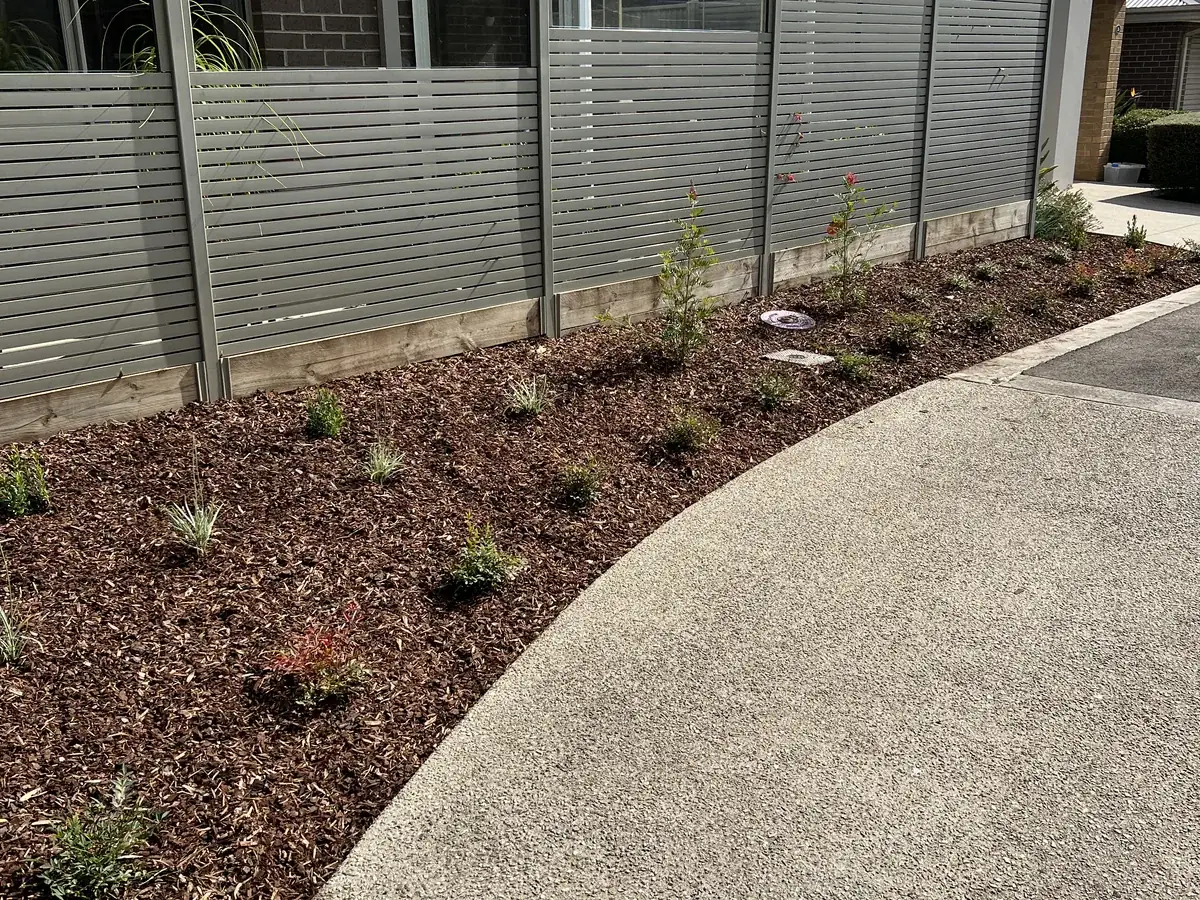
Common property is everything outside the private lots: driveways and their edges, shared lawns, garden beds at entrances and between units, hedges along fences and paths, and street frontage. A maintenance program covers mowing and edging, garden bed care and weed control, hedge trimming on a species appropriate schedule, seasonal pruning, and removal of green waste the same visit. On larger complexes it extends to irrigation checks and reporting problems the committee cannot see from a quarterly walkabout, from failing trees to trip hazards lifting along paths.
The same work goes by several names. In Victoria the legal name is owners corporation, most people still say body corporate, and strata is the industry's word for the same arrangement. Owners corporation garden maintenance, body corporate garden maintenance and strata garden maintenance are one job. A manager's scope may also call it strata landscape maintenance, which means keeping what is already planted, not designing or building new gardens.
The garden is the same. The accountability is not. A residential gardener answers to one household. A strata contractor answers to a committee, a manager and every resident who pays levies, which means the job includes the paperwork and the communication as much as the mowing. Insurance evidence, a certificate of currency on request, a clear scope the committee can hold the contractor to, and a liaison arrangement so residents have somewhere to send requests other than the committee chair. On the complexes I look after, every resident gets a contact card in the letterbox with my work mobile on it, so small requests come straight to me. The complexes that look consistently good are almost never the ones spending the most. They are the ones where scope, frequency and standard are written down.
Visits per year rather than vague regularity. A scope list naming the lawns, edges, beds and hedges, including target heights. Green waste removal included, not left in a corner. Whether clippings are caught or left on the lawn, a line that roughly three quarters of the scopes I see leave out. The response arrangement for between visit requests. Public liability cover, with $20M the common benchmark for commercial and strata work. And a single point of contact who actually does the work or directly manages it, because problems reported to a call centre have a way of dying there. Our guide to what body corporate gardening costs in Melbourne sets out the market ranges and what moves them, and the contract checklist goes through each clause of the agreement.
Contractor churn, where every year brings a new crew and the standard resets to zero. Patchy scope, where the lawns are cut but the beds go feral because nobody wrote them in. Invisible service, where the committee cannot tell if the contractor attended last week. The fixes are structural, not heroic: a written scope, a set frequency, photo reporting if the committee wants evidence, and one operator who owns the standard. If the complex is coming off a bad run, the body corporate gardening page sets out how a takeover works, including the first ninety days process that documents the property before changing anything.
Hedges are the most visible planting on most complexes and the most commonly botched. Species set the schedule: fast growers need four to six trims a year, buxus two or three, and natives should never be cut into bare wood. The full species timing is in our hedge trimming guide. Trees on common property can be protected by local council rules, so significant pruning or removal may need a permit before anyone starts a saw, and a maintenance contractor should flag that rather than discover it. Our storm season guide covers the tree, drain and photo checks worth doing each October.
The complexes that look consistently good are the ones where scope, frequency and standard are written down. Tell us about the common property and you get a free walkthrough, a scope list the committee can hold us to, and one fixed monthly fee, usually with a reply the same business day and rarely later than the next one.