
Insights · For committees & managers
The short answer. Most bad grounds contracts fail at the tender, not on the mower. If three contractors quote three different jobs because the scope was never written down, the committee ends up comparing numbers that mean different things. A one-page site schedule, a line-by-line scope and a few non-negotiable paperwork requirements will get you quotes you can actually compare, and a contract that still works in month eleven.
Start with a site schedule, not a service list
Before anyone prices anything, write down what the site physically is. A simple schedule covers it: the lawn areas and whether a ride-on mower can reach them, the garden beds, every hedge with a rough length and height, trees on common property, the paths and car parks to be blown, bin store and utility areas, and any irrigation. Then add the access facts a contractor needs to price honestly: gates, keys or codes, parking, water access, and anything that slows a visit down such as stairs, basement storage or tight side paths.
Ten minutes with a site plan saves every tenderer guessing. Guessing gets priced as risk, and risk is money the owners pay for nothing.
Define the scope line by line
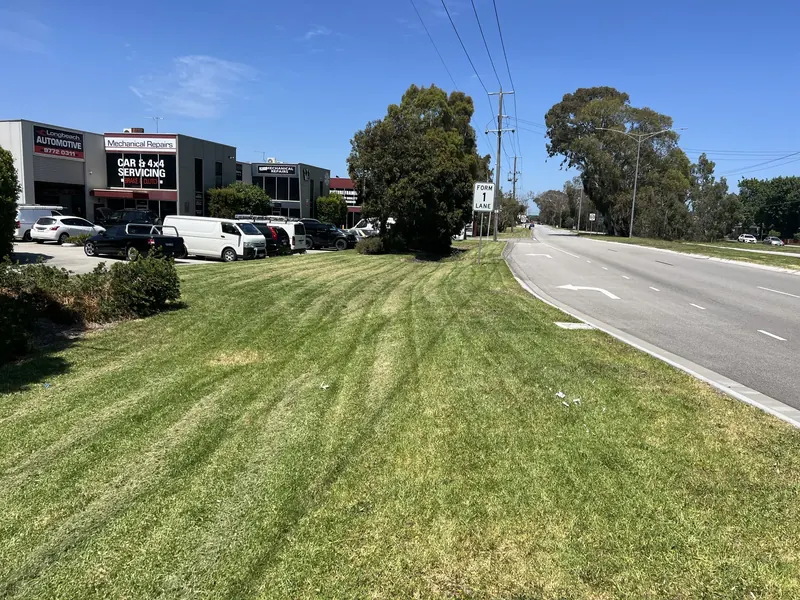
List each inclusion explicitly: mowing and edging; hedge and shrub trimming and how often; garden bed weeding and general weed control; pruning up to a stated height; litter collection; blowing of paths and car parks; and green-waste removal, with the word included next to it. Add the seasonal items that matter on your site, such as autumn leaf collection where there are deciduous trees.
Then name the exclusions just as clearly. Tree work above the stated height, irrigation repairs, major mulch renewals and storm damage beyond a defined scale usually sit outside a maintenance contract and are quoted separately when they arise. If a task isn't written down, one contractor prices it in, another leaves it out, and the cheapest quote wins for the wrong reason.
Set frequency by season, not a flat weekly visit
Melbourne grounds grow hard from roughly September to April and slow right down from May to August. A tender that asks for a flat weekly visit all year pays full price for half-empty winter visits; one that asks only for "as needed" gets whatever the contractor decides. The better structure is a stated seasonal program, for example weekly or fortnightly through the growing season and monthly through winter, priced as one annual figure expressed monthly.
For what that program should cost at 2026 market rates, see our guide to what body corporate gardening costs in Melbourne.
Require the paperwork up front
Set the requirements in the tender so they arrive with the quote, not after the handshake. The core set: public liability insurance at the level your rules or manager require (commonly $10M to $20M for body corporate and commercial sites), evidenced by a current Certificate of Currency showing the insurer, cover level and expiry; an ABN and GST status; safe work method statements for the routine tasks; a Working with Children Check where the site involves a school, childcare centre or similar; a White Card where the site sits inside a construction environment; and references from comparable sites.
None of this is red tape for its own sake. It's the difference between engaging a business and taking a chance on someone with a mower, and the difference only shows when something goes wrong.
Make the quotes comparable
Ask every tenderer for the same five things: a fixed monthly or annual price for the defined scope; one GST basis for everyone, either all prices inclusive or all exclusive; written confirmation that green-waste removal is included; the hourly rate for genuine extras outside the scope, stated now rather than negotiated later; and who actually attends site, whether that's the owner, employees or subcontractors, and whether it's the same operator each visit.
With those locked, comparing quotes becomes what it should be: comparing prices for the same job.
Contract terms that protect both sides
A twelve-month initial term suits most sites: long enough for the contractor to price the seasons honestly, short enough to review. Pair it with an exit clause on around 30 days' notice for either side, which keeps performance the reason the contract survives rather than lock-in. Add an annual price review mechanism so increases arrive as a conversation instead of a surprise, a written reporting expectation covering what was done each visit and anything flagged, and re-supply of the insurance certificate at each renewal. For the full list of clauses to get into the signed agreement, see our body corporate contract checklist.
This is practical scoping guidance rather than legal advice. Owners corporation managers usually hold contract templates that carry these terms properly.
Red flags in tender responses
Watch for a contractor who quotes without offering a walkthrough, because a price set blind gets re-set later. Reluctance to put the scope in writing is the same warning in a different jacket. A price far below the rest of the field usually means something in the scope is missing, most often insurance or green-waste disposal. An insurance certificate that doesn't appear within a few days of being requested tends never to appear. And vague answers about who attends site usually mean a rotating cast of subcontractors the committee will never meet twice.
Tendering a site in south-east Melbourne? We respond to body corporate and commercial tenders with a written scope against your site schedule, a current $20M Certificate of Currency, and one fixed monthly price, usually after a free walkthrough. See our body corporate garden maintenance service, or request a walkthrough and quote, usually with a reply the same business day and rarely later than the next one.
Common questions
How many quotes should a body corporate get for gardening?
Three comparable quotes is the practical standard, and some owners corporation rules or manager policies require multiple quotes above a spend threshold. Comparable matters more than many: three prices against one written scope beat five prices for five guessed jobs.
What insurance should a grounds maintenance contractor have?
Public liability cover is the non-negotiable, commonly $10M to $20M for body corporate and commercial sites. Ask for a current Certificate of Currency showing the insurer, cover level and expiry date. A contractor employing staff also needs workers compensation cover; a sole operator should simply say that's what they are.
How long should a grounds maintenance contract run?
Twelve months suits most sites: long enough for the contractor to price the seasons honestly, short enough for a proper review. An exit clause on around 30 days' notice for either side keeps performance, not lock-in, as the reason the contract survives.
Related
$20M Public & Products Liability
Fully insuredPolice-checkedWWCC
White CardSeasonal condition reports
Certificate of Currency
Request a quote
Add Kanga to your tender list
Send through your site schedule and scope, or just the address. You get a written scope priced against it, a current $20M Certificate of Currency, and one fixed monthly figure, usually with a reply the same business day and rarely later than the next one.
- $20M public & products liability, insured to work on your site
- The same operator every visit, with seasonal condition reports
- Fixed monthly fee with no call-out charges, green waste included