
Insights · Factory & industrial
The short answer. Industrial grounds fail in a predictable order: the edges go first, then the nature strip, then the long grass along the back fence that nobody owns. A proper program covers the whole boundary on a written schedule and arrives with the paperwork your compliance file needs: a current insurance certificate, safe work method statements and seasonal condition reporting.
Why industrial sites are different from gardens
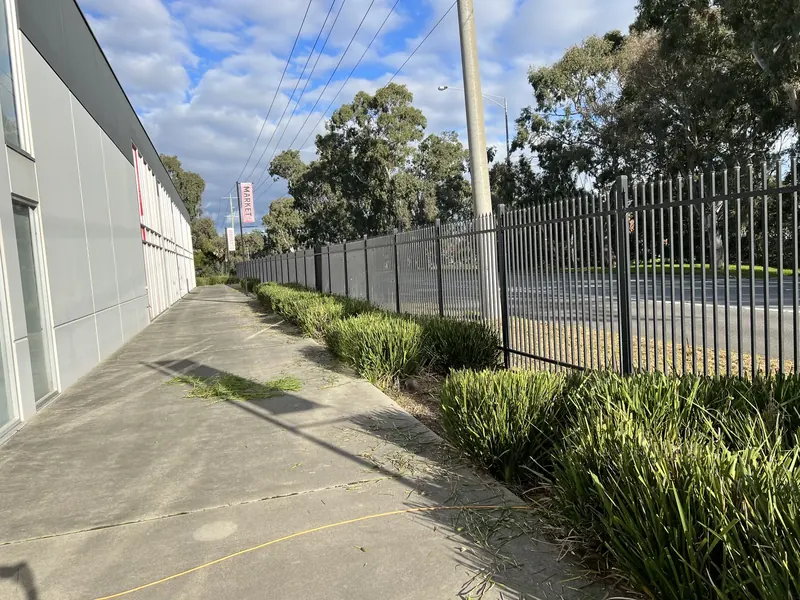
A factory or warehouse site is mostly hardstand, so the grounds work concentrates where the site meets the world: the office frontage, the nature strip, the crossovers, the fencelines and the odd corners such as detention basins and easements that sit outside anyone's daily job. Nobody inside the building is responsible for the back fence, which is exactly why the back fence is where sites let go.
The frontage carries more weight than its square metres suggest. Clients, auditors and prospective tenants form their view of the operation at the gate, and a tidy boundary reads as a site where things are under control.
The risk sitting in long grass
On industrial land, overgrowth is a risk item before it's a presentation item. Victorian councils issue fire prevention notices in late spring, and boundaries backing onto rail corridors, creeks or vacant land carry the fuel load that attracts them, so long grass needs to be down before the fire danger period, not after the notice arrives. Long grass near drains, basins and creek corridors is also snake habitat through the warmer months across the south-east, which matters wherever staff cross open ground to car parks and gates.
Two quieter ones: grass and shrubs left to grow at crossovers block sightlines between trucks, forklifts and pedestrians, and unmanaged leaf and grass load ends up in stormwater pits, where a blocked pit announces itself as a flooded loading dock in the first heavy rain. None of this is dramatic. It's just what unmanaged edges do, on a schedule you can predict.
What a program should cover
The scope should read like the site, not like a gardening brochure: all turf including the nature strip, edges held along kerbs, fences and buildings, hedges and screen plantings kept off fences and signage, the garden beds at the office frontage kept presentable, and boundary long grass cut on schedule rather than on complaint.
Two line items separate a professional program from a mow-and-go: litter lifted from turf before mowing, because a mower turns whatever it finds into confetti, and green waste removed from site each visit rather than stockpiled in a corner. Where the site has established trees, seasonal leaf work belongs in the scope too, mostly for the stormwater pits' sake.
If the offices on the site have their own plants, they can sit in the same scope. On a Cranbourne West site in our care the frontage, the car park beds and office plant maintenance for 188 indoor plants are all done on the one fortnightly visit.
The paperwork side
For an industrial site the contractor's file matters nearly as much as the mowing. The set your compliance folder should hold: a current Certificate of Currency for public liability at the level your site requires, commonly $10M to $20M for industrial work; safe work method statements for the routine tasks; a White Card; a police check where your site policy asks for one; a completed site induction; and seasonal condition reports, which are your standing evidence of maintenance for audits and insurers.
The clean way to get all of that is to ask for it with the quote, not after the handshake. Our guide to tendering a grounds maintenance contract sets out the full requirement list and how to make the quotes comparable.
Scheduling around operations
Grounds work on a live site has to fit the operation, not fight it. That means visits timed around dispatch windows and shift changes, early starts where the site allows them, car park areas done outside peak movements, and access protocols for gates and alarms agreed once and then followed. The same operator attending every visit keeps inductions to a single event instead of a revolving door.
A contractor who asks about your operating hours and truck movements before quoting is pricing the real job. One who doesn't will discover them in month one, and the discovery usually lands on your desk.
Budgeting: fixed program or reactive call-outs
Reactive mowing looks cheap because nothing is spent until someone complains, but long grass is slow work, so each reactive cut costs more than a scheduled one, and the site spends half the year looking like the complaint that triggered the visit. A fixed monthly program prices the whole year once, holds the boundary at a standard, and turns grounds from a recurring purchasing decision into a line item. For how the two pricing models compare in practice, see fixed fee versus hourly garden maintenance.
Managing a factory or industrial site in the south-east? Kanga runs fixed-fee grounds programs for factories and industrial sites across Dandenong South, Cranbourne, Pakenham and south-east Melbourne, with a $20M Certificate of Currency, SWMS and seasonal condition reporting. See the factory & industrial service or the local pages for Dandenong South, Braeside and Mordialloc, Cranbourne West and Pakenham, or request a walkthrough, usually with a reply the same business day and rarely later than the next one.
Industrial site walkthrough checklist
Walk the full boundary before comparing quotes. A scope that only measures the office frontage will miss the areas that create complaints, fire-prevention work and access problems later.
- Turf and edges: Include the nature strip, crossovers, fence lines, building edges and isolated lawn panels.
- Long grass: Mark rear boundaries, vacant-land edges, easements, detention basins and other seasonal cut-down areas.
- Visibility: Check shrubs and grass around gates, signs, pedestrian routes and vehicle sightlines.
- Stormwater: Identify leaf-drop zones, pits and drains that need to stay clear.
- Operations: Record truck windows, shift changes, parking constraints, inductions, gates and alarm procedures.
- Paperwork: Request the Certificate of Currency, safe work method statements and the agreed condition-reporting format with the quote.
For a recurring program across the whole boundary, see factory and industrial grounds maintenance. The separate grounds maintenance tender guide covers quote comparison in more detail.
Common questions
What should industrial grounds maintenance include?
All turf including the nature strip, edges along kerbs, fences and buildings, hedges and screen plantings, the beds at the office frontage, litter lifted before mowing, green waste removed from site, and boundary long grass brought down on schedule and always before the fire danger period.
What paperwork should a grounds contractor provide for an industrial site?
A current Certificate of Currency for public liability, commonly $10M to $20M for industrial sites, safe work method statements for the routine tasks, a White Card, a completed site induction, and seasonal condition reporting as standing evidence of maintenance for audits and insurers.
How often should a factory site's grounds be serviced?
For most sites, fortnightly to monthly through the growing season and monthly to six-weekly through winter for the turf areas, with boundary long grass cut on schedule and at minimum before the fire danger period each year. The frequencies should be written into the contract by season.
Related
$20M Public & Products Liability
Fully insuredPolice-checkedWWCC
White CardSeasonal condition reports
Certificate of Currency
Request a quote
Get the whole boundary on a written schedule
Tell us about the site and its operating hours. You get a free walkthrough, a scope that covers the fencelines and odd corners rather than just the office frontage, and one fixed monthly price, usually with a reply the same business day and rarely later than the next one.
- $20M public & products liability, insured to work on your site
- The same operator every visit, with seasonal condition reports
- Fixed monthly fee with no call-out charges, green waste included