
Hedge trimming and pruning in Melbourne, by species
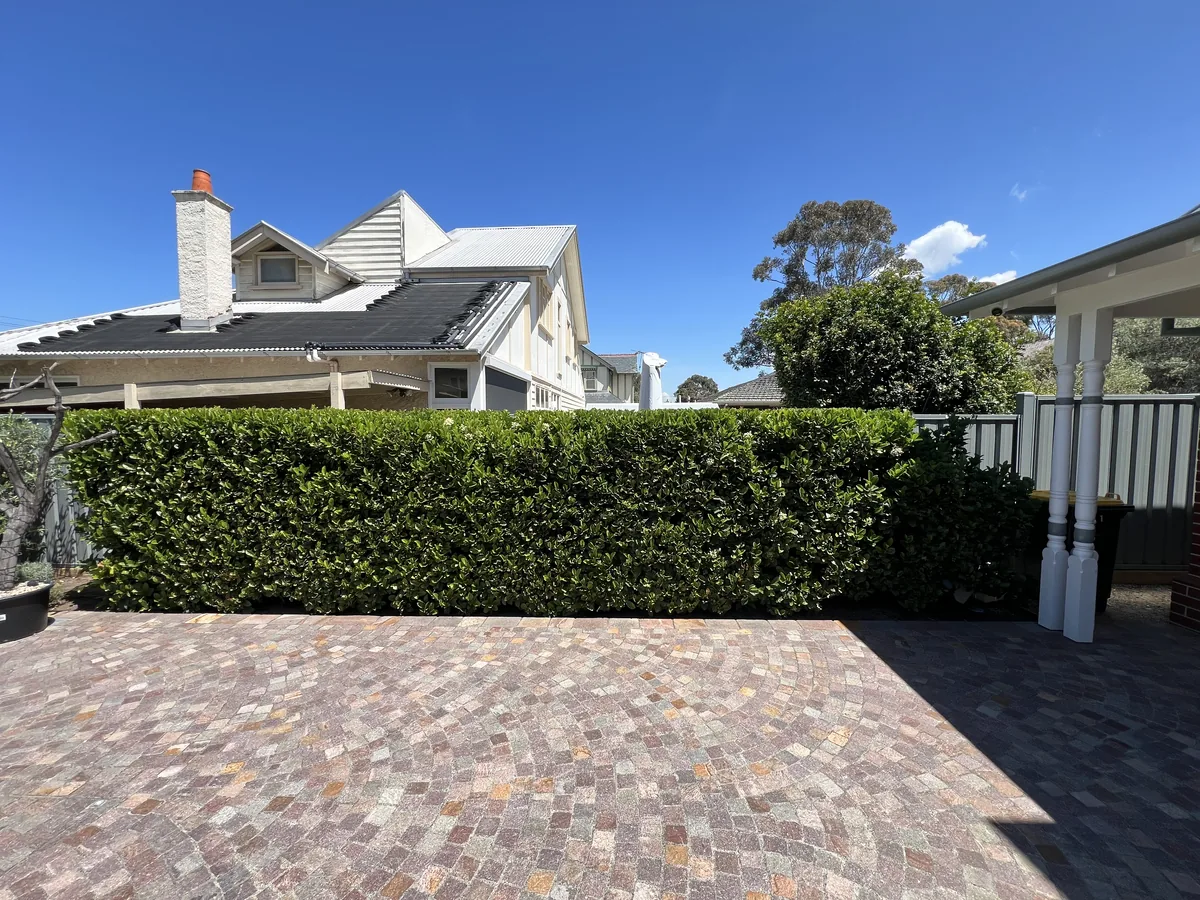
The short answer. Most Melbourne hedges look sharp on three to five trims a year through the growing season, roughly October to April, with one tidy in late winter. Little and often keeps faces dense and lines crisp. One heavy annual cut does the opposite: bare patches, brown edges and a hedge that spends months recovering instead of presenting well.
On commercial and body corporate sites the hedge program has to answer to more than looks. Growth over paths, driveways and exits becomes a sightline and clearance issue rather than a cosmetic one, so trims are scheduled ahead of the problem instead of after a complaint. Clippings are cleared the same visit so paved surfaces stay safe, work is timed around trading hours and resident access, and heights that need more than a step platform are flagged early rather than improvised. The practical difference from residential work is that commercial hedge trimming runs as a scheduled program across the year, sized to each species from the timing list below, rather than as a call out when someone finally notices. On common property the same program keeps every frontage and shared path consistent, which is what committees are actually buying. The strata garden maintenance guide shows where hedges sit in a full common property program.
Hedges hold their shape from a dense outer layer of leaf. Light, regular trims keep cutting into soft new growth, which reshoots quickly and thickens the face. Letting a hedge blow out and then cutting hard goes back into old wood, and several common species reshoot poorly or slowly from bare wood. The maintenance rhythm is the difference between a wall of green and a hedge with holes. On a commercial frontage or a shared driveway that rhythm is also the difference between a site that reads as managed and one that reads as neglected, because the hedge is usually the first planting a visitor stands next to.
Pittosporum, including Silver Sheen and screening varieties, grows fast from spring to autumn and holds its line on four to six trims a year on formal frontages; it tolerates reasonably firm cutting but goes leggy if neglected. Lilly pilly is similarly quick, takes shaping very well, and benefits from regular trims that also remove the new growth psyllids favour. Buxus is slow and formal, needing only two or three trims, traditionally around November and again in late summer, avoiding cuts in extreme heat which scorches fresh clips. Westringia and other coastal natives take frequent light shaping beautifully but resent being cut hard into bare wood, so never let a native hedge get away. Photinia pushes its red flush after each trim, so timing cuts sets when the display appears. Murraya is best trimmed lightly after each flowering flush through the warm months.
Where a hedge is grown partly for flowers, trim just after each flush rather than on the calendar. Cutting murraya, camellia hedging or flowering natives immediately before bloom removes the season's display. On mixed sites it is worth listing which hedges are formal green walls and which are flowering features, because they want different rhythms from the same crew.
Trimming is the regular shear across the face and top that holds a hedge to its line, and it is what the program above schedules. Hedge pruning is selective work inside the plant: cutting individual branches back to a union to open congested growth, remove deadwood and rubbing stems, or bring the size down in stages. Most hedges need both, trimming through the growing season and a pruning pass every year or two, usually in late winter when the structure is easy to read. Renovation of an overgrown hedge is pruning rather than trimming, which is why the species limits below matter before anyone cuts into old wood.
Renovation is species specific. Lilly pilly, photinia and viburnum generally regenerate from hard cuts done in early spring with feed and water behind them. Pittosporum handles staged reduction better than one brutal cut. Buxus recovers slowly and dislikes heavy renovation. Westringia and most fine leafed natives often do not return from bare wood at all, so replacement can honestly be cheaper than resurrection. If a hedge has been neglected for years, plan the cut back over two seasons: one face and the top first, the second face a year later, so the plant always keeps working leaf.
The timing question has a short answer: the two trims that hold shape longest come after the spring flush and again in mid to late autumn, fast growers earn a mid summer pass, and hard renovation belongs in early spring on species that can take it. The cost question depends on who is asking. For a standalone visit, Melbourne market rates most trades publish sit around $50 to $90 an hour for a single operator, with small jobs commonly quoted between $150 and $400 and tall or access heavy hedges priced on inspection. The drivers are height, face area, access and how much green waste leaves the site. Commercial and body corporate sites are usually priced per visit across an annual program rather than by the hour, which spreads the cost evenly and keeps every trim inside the schedule the species actually needs.
A good agreement names the hedges, the target height and face line in metres, the number of trims per year, and cleanup expectations including green waste removal. Access and safety matter on shared sites: trims along driveways and paths on common property should include clearing clippings the same visit so surfaces are safe. Sharp tools and clean cuts also reduce disease entry, which is part of why professional trims age better than a quick going over. See how hedging fits a full program on our Kanga Standard page.
Kanga runs hedge trimming and pruning as part of recurring grounds programs for commercial, body corporate and large residential sites across Melbourne's south east and the Mornington Peninsula. That covers formal frontages, screening runs, carpark hedges and large hedge trimming where the growth has got away. Professional hedge trimming on a schedule costs little more than an annual blowout cut and presents better every week of the year. Hedge maintenance sits inside the one fixed monthly fee with mowing, gardens and green waste removal, so a site has one contractor and one standard. Request a quote or see the full commercial grounds maintenance program. Standalone lawns and gardens on a regular round are covered on the lawn mowing and garden maintenance page.
Hedges hold their line when the trims are booked for the year, not called in when someone notices. Tell us about the site and you get a free walkthrough, a trim schedule set to each species, and one fixed monthly fee that covers hedges, mowing, gardens and green waste, usually with a reply the same business day and rarely later than the next one.