
One fortnightly visit, inside and out
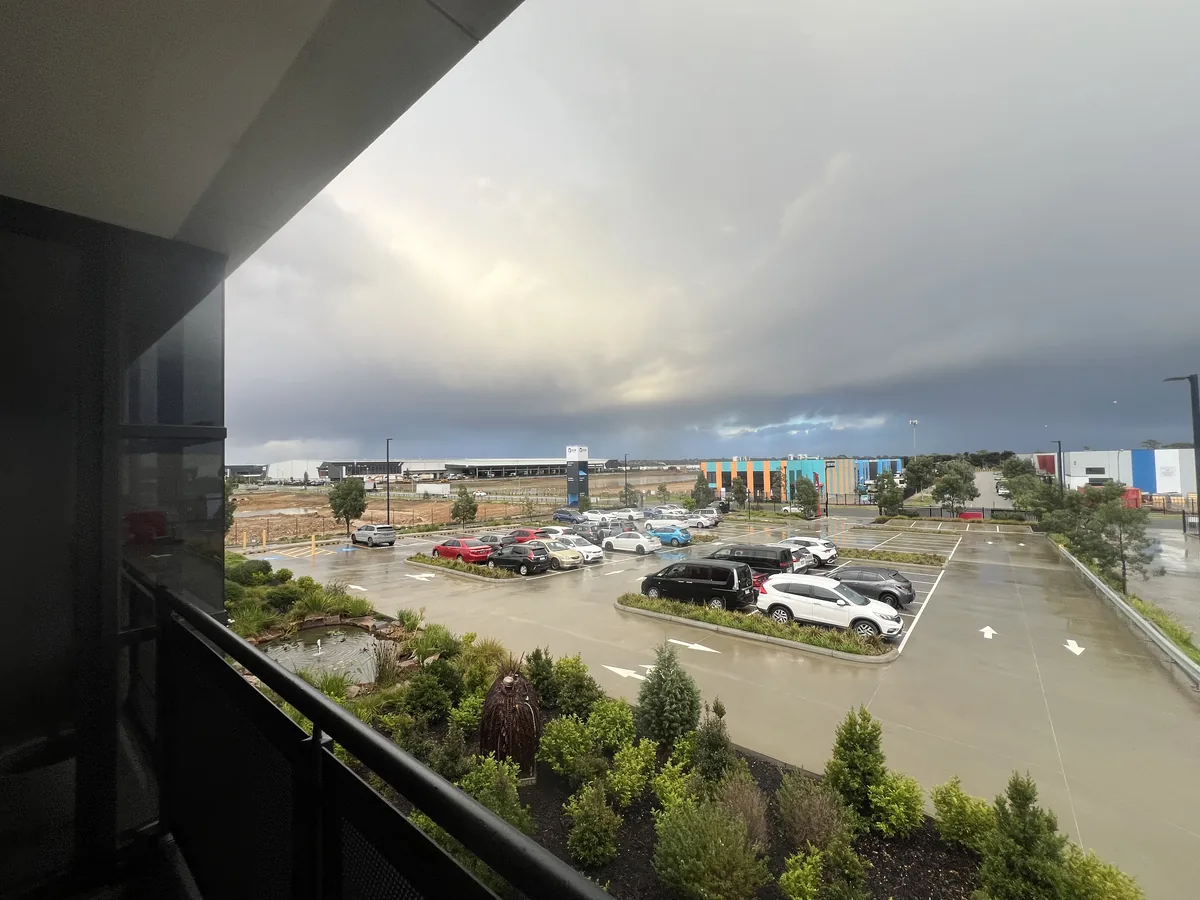
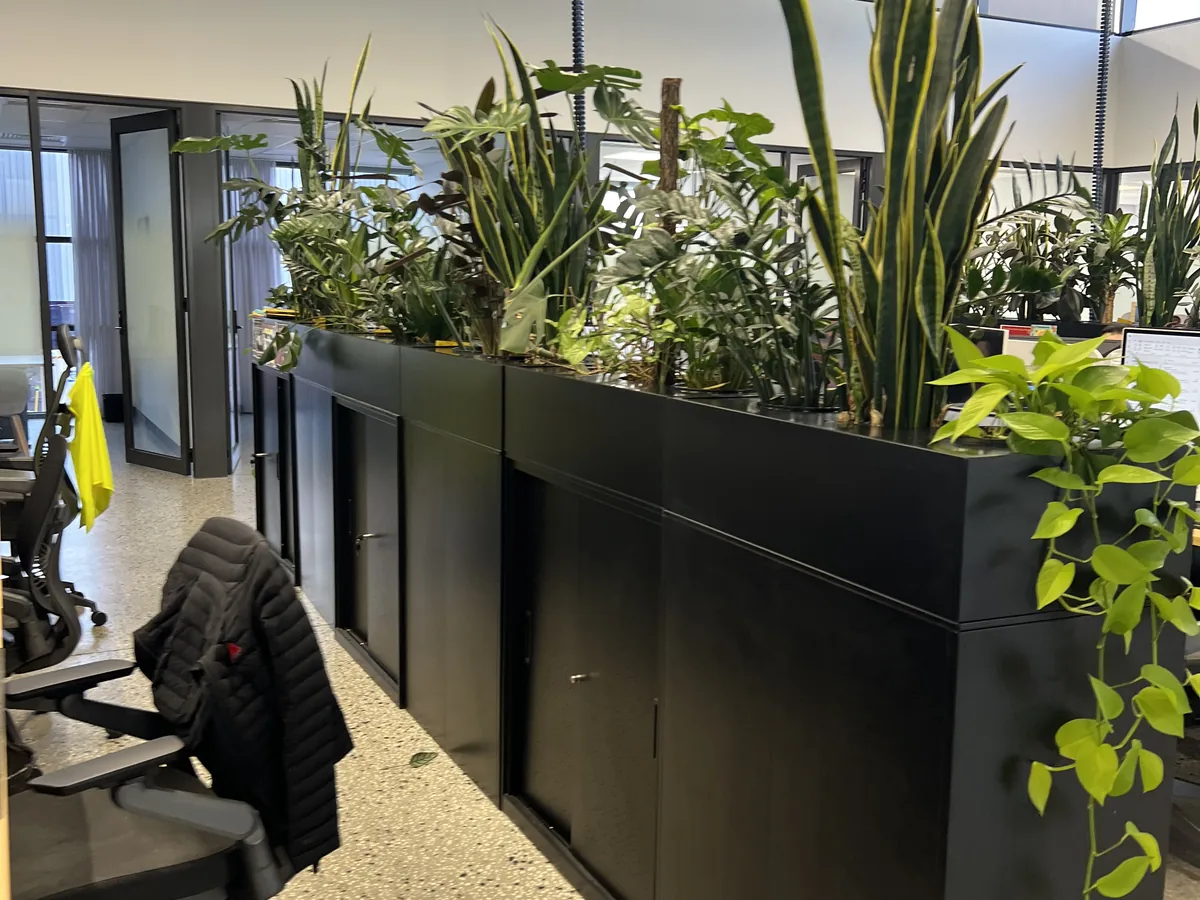
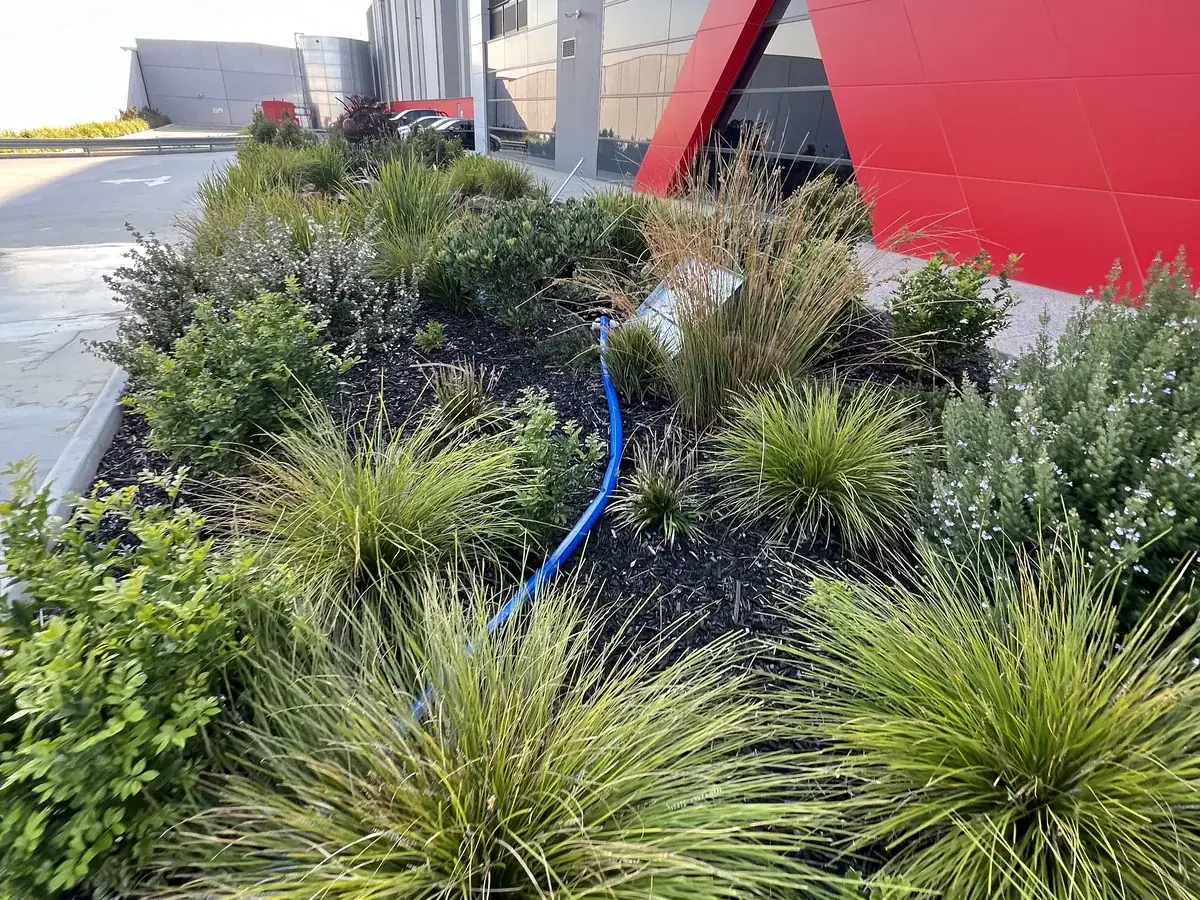
On Whitfield Boulevard, Kanga looks after the head office, showroom and warehouse of a hardware business and the offices of its sister company next door. The two are serviced in one fortnightly stop, first thing where possible so the car park is clear before the office fills, and the visit covers three quite different jobs. Outside there are native entry plantings, car park beds, nature strips and lawns. In the courtyard there is a pond of about 4,000 litres with fish, eighteen aquatic plants and a filter. Upstairs and down there are 188 indoor plants, most of them in planter rows along the desks.
The outdoor beds are a good example of maintenance that is more than mowing. A patch of dieback in the myoporum groundcover was traced to a leaking irrigation line, the line was repaired, and the cover has closed from about 60 to 85 per cent since. Young golden wattles are kept small with light formative pruning so they stay clear of the truck exit and the sightlines, and when gall rust showed up on one of them the galls were cut out and taken off site rather than left to spread. The feature bed around the pond is clipped into domes and cones so it frames the art installation beside it, and the pond runs to a calendar, the ultraviolet lamp replaced every September before the algae season, the fountain switched to continuous running from October to April for overnight oxygen, and the water tested each quarter. When the pH came back at 6.5 it was lifted gently with crushed coral rather than a chemical, because Melbourne's very soft water carries little carbonate to buffer it.
Indoors the plants are watered by species, not by the calendar. Peace lilies and arrowheads are happy with a reservoir that draws down between visits, while snake plants and happy plants rot in one, so the catchment tubs under the planter rows are audited one section per visit. A mealybug outbreak in the trailing plants over the stairwell was the site's hardest problem. A contact treatment was tried first, then a soil-applied systemic, and neither stopped it. What worked was isolation, the affected plants swapped like for like from backup stock grown on downstairs from the site's own cuttings and nursed back away from the office. Nothing gets sprayed over desks. Chronic tip burn on the happy plants turned out to be fluoride rather than salts, because the local supply from the Tarago system is fluoridated and Melbourne's water is too soft for salts to be the cause, so the fix was the cheapest one first, a dolomite top-dress, no perlite in their mix and a flush every few months. Feeding is by controlled-release pellets, because liquid seaweed and fish feeds smell for days in a working office.
Next door, the sister company's grounds run on a shorter version of the same visit. A screening hedge along the signage fence that had picked up pests from over the boundary was removed at no charge as part of the regular maintenance, and the client was given two replanting options, a native hedge or a climber on the mesh, to decide at their own pace. Staking ties come off the young trees before they girdle, the drip irrigation is reactivated each spring, and the pine bark mulch is topped up when it thins.