
Watering by the numbers for Melbourne lawns and gardens
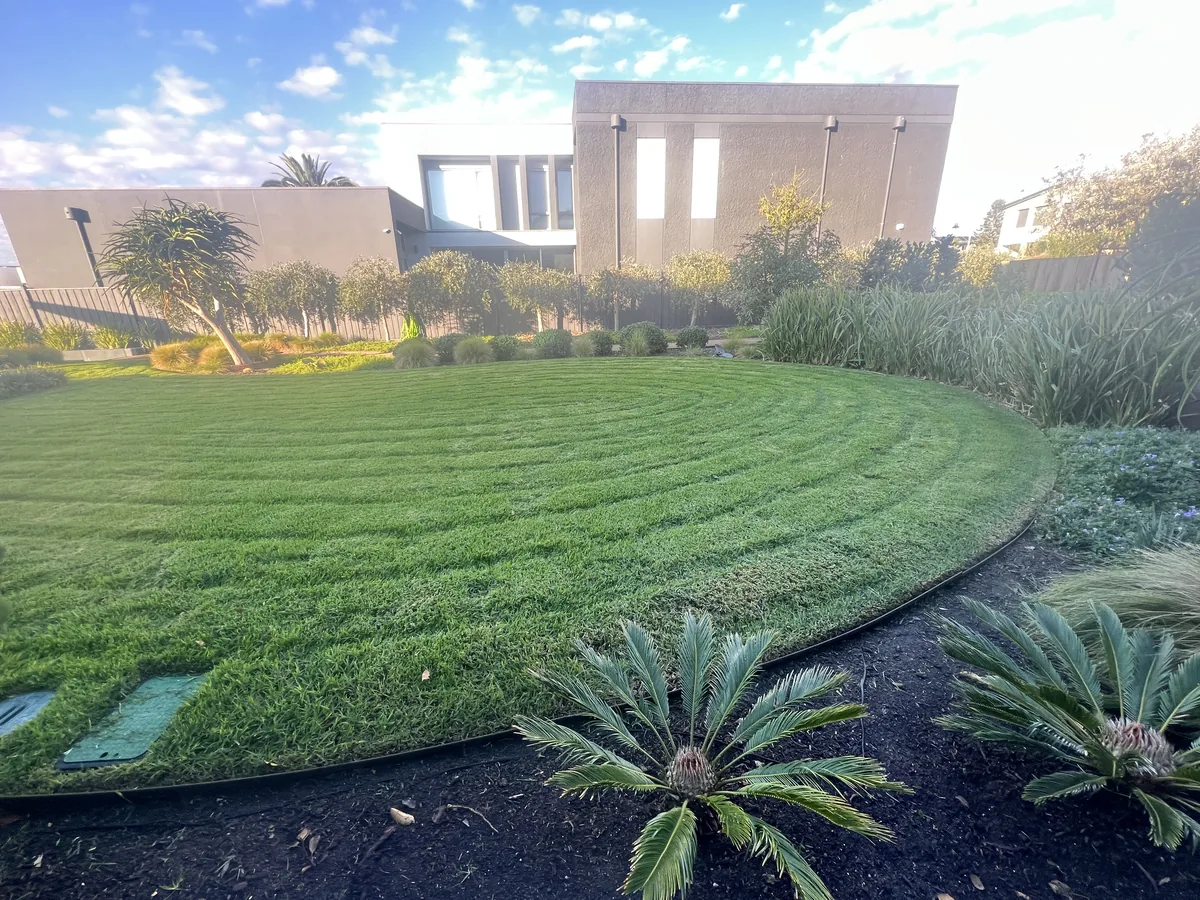
The short answer. Plan watering in millimetres a week, not minutes a station. Take the week's evaporation figure, multiply it by a plant factor (about 0.6 for a warm season lawn, 0.8 for a cool season one), take off the rain that soaked in, and put the rest down in one or two deep waterings between 6 pm and 10 am. In a Melbourne summer week a warm season lawn uses roughly 20 to 30 mm.
Rain is measured in millimetres, and plants lose water the same way, through evaporation from the soil and transpiration through the leaves. One millimetre over one square metre is one litre. Plan in millimetres and the rain counts by itself. If 18 mm fell this week, the top up may not be needed at all. Plan in minutes and nobody knows what the site received, because no two zones put water down at the same rate.
The Bureau of Meteorology publishes a daily evapotranspiration figure for Melbourne Airport and Olympic Park. It is the water a well watered grass surface would use that day, and it rises with heat, sun and wind. In the week to 26 November 2026 the Melbourne Airport figure added up to 35 mm, from 3.1 mm on the lowest day to 6.5 mm on the highest. A lawn or a bed uses a share of that figure, and the share is called the plant factor.
The same week brought 21.4 mm of rain at the airport, 20 mm of it on 21 November. On paper that covered a warm season lawn. A 20 mm downpour on dry ground loses some of it to runoff, though, so a lawn on clay or on a slope could still have wanted a top up by the weekend.
Warm season lawns, the kikuyu, couch and buffalo on most Melbourne common areas, hold good condition at a plant factor of about 0.6. In that November week it came to about 21 mm. Cool season lawns such as tall fescue blends sit nearer 0.8, about 28 mm for the same week, which is one reason they suit shaded or high profile areas better than broad common lawns. University of California research puts the bare survival levels lower, at about 40 percent of the figure for warm season grasses and 60 percent for cool season ones, and the cover thins and browns at those levels.
Garden beds vary more. Thirsty exotics such as hydrangeas sit near the lawn figures, while mulched beds of established coastal natives such as westringia, correa and lomandra often need nothing beyond rain outside a long dry spell. New plantings of any kind need more until their roots reach the soil around them.
Every irrigation zone puts water down at its own rate, so the honest method is a catch cup test. Set a few straight sided containers on the lawn, run the zone for 15 minutes and measure the depth in each. If 15 minutes gives 5 mm, a 20 mm week needs an hour of run time, split into two sessions instead of seven short ones. Pop up sprays commonly apply 25 to 40 mm an hour and rotor heads 10 to 20 mm an hour, which is why copying run times from one zone to the next goes wrong.
One or two deep waterings a week grow deeper roots than daily sprinkles and lose less to evaporation, and Yarra Valley Water gives the same advice for summer. Under Victoria's Permanent Water Saving Rules, sprinklers and other watering systems on home and commercial gardens can only run between 6 pm and 10 am, while a hand held hose with a trigger nozzle can be used at any time. Early morning is the better end of that window, with less wind and leaves that dry before evening.
On body corporate and commercial sites the waste is rarely the schedule. It is usually the hardware. A broken head floods one strip while the rest of the zone runs long to make up for it, spray goes over paths and the road, sunken heads spray into the grass, and controllers are still on summer settings in May. Running and walking each zone once a season finds most of it. Mulch at about 75 mm slows how fast beds dry out. Checking the system and adjusting the controller through the season is part of a scheduled body corporate garden maintenance program.
An irrigation check through the season sits in the same visit as the mowing and the beds. Tell us about the site and you get a free walkthrough and one fixed monthly fee, usually with a reply the same business day and rarely later than the next one.